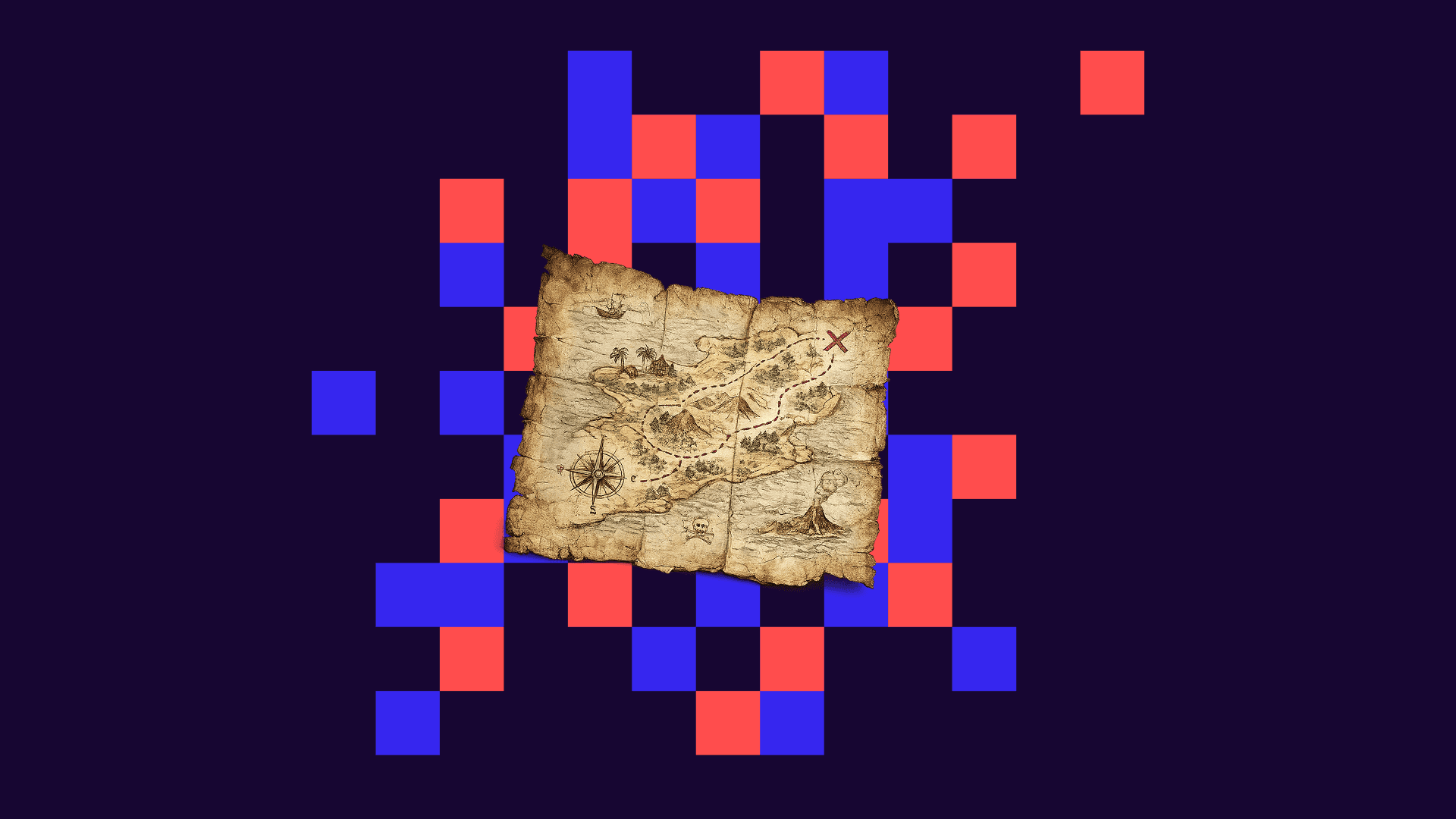
Lost in the AI jungle: about miracle doctors and missing roads

Team Resilience
AI
LinkedIn is filled with them: success stories about AI transformations. Companies that innovate rapidly. Teams that achieve magical results with AI.
But when you inquire about the details, you often end up with locally running versions of ChatGPT or vibe-coded productivity tools. Great for yourself, but it doesn't provide the large-scale business impact that LinkedIn talks about.
There is still a huge gap between "smartly deploying AI" and "actually deriving value from it."
You could have the best AI agent in the world, but if it doesn’t add the value you expect, then you have an expensive toy instead of a business tool. Time to change that.
The two obstacles that cause AI projects to fail
When integrating AI into organizations, I see 2 obstacles repeatedly. Here they are:
Obstacle 1: getting lost in the AI jungle
Perhaps you recognize this. You encourage your employees to search for good AI tools, because you really have to keep up with the times. They dive enthusiastically into the AI jungle. But what do they find there? No idea.
You lose track, sign up for one subscription after another, and before you know it, your organization is filled with clever little miracle workers who live in their own spots in the jungle. Without any paths connecting them and without anyone having the map.
Obstacle 2: not getting AI integrated into your processes
Suppose one of your AI experiments succeeds. You have built a super strong AI agent that works really well. It produces good output and everyone can work with it. Then you're done, right?
Well, not quite yet. Because now the real work begins: how do you get that output processed in your existing process? How do you ensure that agent communicates with the rest of the systems? That when it performs a task, it also communicates with your CRM, your ERP, your order management?
This is the point where almost all companies get stuck. That AI agent can be incredibly smart, but if you can't monetize the output within your business process, you are just burning money.
How to unlock the value of AI
Here is the crux of the problem: most companies treat AI as a separate project. A separate team, separate tools, separate budgets. And then everyone is surprised that it does not seamlessly integrate with business processes. Fortunately, it can be different.
OutSystems is all about that. AI is not a separate project, but simply a new possibility within the platform you are already using.
Building AI in the world you already know
In the Agentic Workbench of OutSystems, you can directly build AI agents in the same smart tool that you are already familiar with from your low-code projects. You determine what the agent should be able to do, what data and sources it needs, and how it should respond.
Because your agent and your applications live on the same platform, linking them is no longer a project. It is simply the next step in your development process. Instead of living in an AI jungle where no one can find their way, you build a powerful network of roads that are clearly connected to each other.
Just work with your existing experts
An added advantage is that with this approach, you do not need to engage extra AI consultants. OutSystems developers can also build AI agents just fine. Half a day's training turned out to be enough for our colleagues, as it fits into their familiar environment. So you can just collaborate with the trusted people who understand your business perfectly.
In OutSystems we deploy AI agents at record speed
What does this mean in practice? At our clients, we are now building and implementing AI agents in weeks instead of months.
Take a concrete example: an AI agent that checks purchase orders for discrepancies. Traditionally, you would first need to assemble a data science team, purchase a separate AI platform, build APIs to extract data from your ERP, and then create APIs to write the outcomes back. Months of work.
In Agent Workbench, you link the right language model, input the correct business rules and historical data, test it within the process, and go live. One sprint instead of a quarterly project.
The gains are significant, and this is just for one optimization. Let alone if you do this ten times; the gains become exponentially larger.
Ready for AI that works?
Have you already got your business processes running in OutSystems? Or are you considering going that way? Then this is the moment to see how you can use AI not as a standalone experiment, but as an integrated part of your processes.
Because only then will you belong to the very small slice of the pie that actually makes it.
Do you want to know what this could look like for your situation? Let’s brainstorm about the possibilities.